
KUNG PAO TO THE RESCUE!
This story was created by our partners at the Heavy Table, a weekly culinary newsletter dedicated to covering the best food and drink of the Upper Midwest. Back them on Patreon to receive four distinct email newsletters focused on dining, the restaurant business, spirits, and home cooking: http://www.patreon.com/heavytable
This recipe is a throwback to better days.
by James Norton
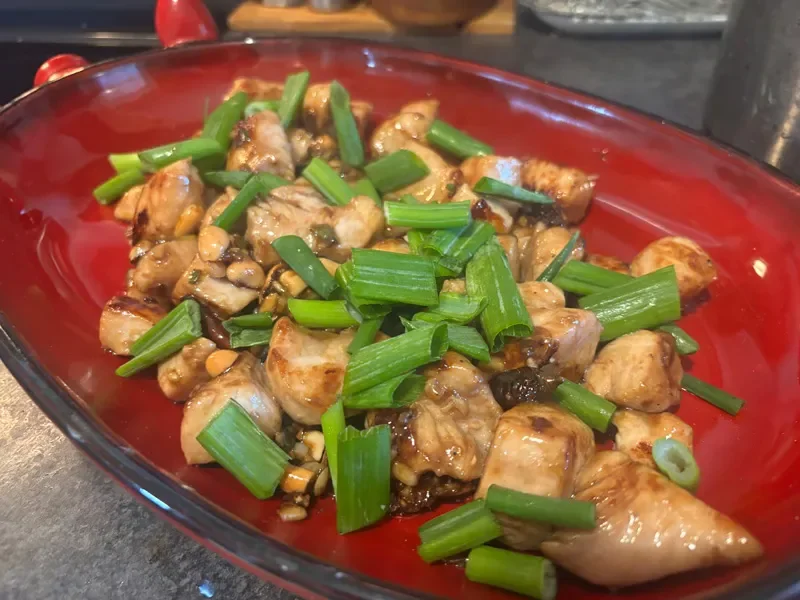
It has become increasingly and depressingly clear that it’s increasingly and depressingly difficult to find Chinese-American restaurants that reliably cook from scratch. For every Sidewalk Kitchen or Mandarin Kitchen there are 20 or 30 neighborhood spots that ladle up some version of food service freezer-to-fryer dishes for much of their menus.
Paradoxically, I blame the improved quality in bagged pre-made Chinese-American entrees - the orange chicken you get by the 12# box is now good enough to be “OK,” and that’s also good enough to please diners who just want to pay for comfort food without the hassle.
I don’t blame the restaurateurs - they’re businessmen - but I do get frustrated that many of my fellow diners will spend $16 for an indifferent pile of corn syrup-entombed chicken glop.
It takes real desperation to make your own Chinese-American takeout classics at home from scratch, but that’s where I am these days. I locked down an excellent, gravy-forward beef stir fry a few months ago, I can make a passable mushu pork (with scratch pancakes) and now I’ve cooked and polished a Kung Pao Chicken recipe that absolutely knocked the socks off of my family.
Done correctly, Kung Pao chicken delivers two powerful punches of flavor - the lively spicy heat of the wok-fried chiles, and the numbing, tingling kick of the Szechuan peppercorn. It seemed like a legitimate hassle to make a special trip to United Noodlesto produce this dish, but after the fact I was delighted to have made the effort - ingredients like black vinegar, Szechuan peppercorns, and tiny, punchy bird chiles certainly can be substituted but probably shouldn’t.
While I was able to find Szechuan peppercorns at United Noodles (a generously sized bag for about $3), I couldn’t find a ground-up version of the spice, so I used my own dedicated spice grinder at home to buzz through a couple cups worth so I’d have plenty to use for future recipes. (If you don’t have an electric spice grinder, consider either getting one or picking up a molcajete, the latter of which is a great way to process whole spices AND a terrific vessel for making and serving homemade guacamole.)
To yield the method below, I made minimal changes to an excellent Kung Pao chicken recipe from Epicurious - slight boosts to the hoisin, garlic, and ginger levels, smaller pieces of chicken and an overall doubling of quantities to yield a more human-scale result - the original recipe served four (polite) diners, while this one will let your family go absolutely feral over the deliciousness and still leave enough food for lunch the next day.
KUNG PAO CHICKEN
Chicken and marinade:
2 Tbsp low-sodium soy sauce
4 tsp dry sherry
1 Tbsp cornstarch
2 lb. boneless skinless chicken breasts or thighs, cut into .75” cubes
Sauce:
2 Tbsp. Chinese black vinegar
2 tsp. low-sodium soy sauce
1 Tbsp. hoisin sauce
2 tsp. sesame oil
4 tsp. sugar
2 tsp. cornstarch
1 tsp. ground Szechuan peppercorns
4 Tbsp. peanut oil
16–20 dried red chiles such as Xiao Mi La (bird chiles) or chiles de árbol
6 scallions, white and green parts separated, thinly sliced
5 garlic cloves, minced
1 Tbsp. minced or grated fresh ginger
1/2 cup dry-roasted peanuts (salted or unsalted), roughly chopped
White rice to serve
Whisk 2 Tbsp. low-sodium soy sauce, 4 tsp. dry sherry, and 1 Tbsp. cornstarch in a medium bowl to combine and dissolve cornstarch. Add 2 lb. boneless skinless chicken breasts or thighs, cut into .75” cubes and toss gently to coat. Let stand at room temperature 10 minutes or refrigerate up to 2 hours.
Whisk 2 Tbsp. Chinese black vinegar, 2 tsp. low-sodium soy sauce, 1 Tbsp. hoisin sauce, 2 tsp. sesame oil, 4 tsp. sugar, 2 tsp. cornstarch, and 1 tsp. ground Sichuan peppercorns in a small bowl to combine and to dissolve sugar and cornstarch. Set aside.
If you’re making rice in a rice cooker, get it started before you even heat your wok. Ideally, the rice and the chicken will finish at about the same time.
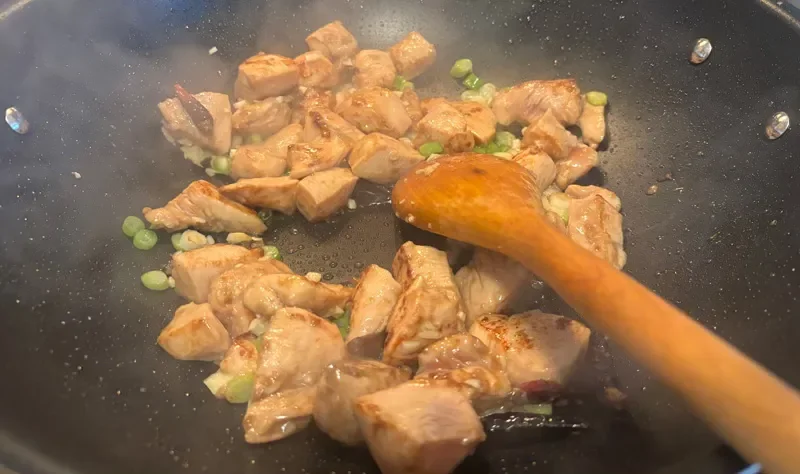
Turn on your stove’s exhaust fan or run an air filter. Heat a wok or large skillet over high heat until a bead of water sizzles and evaporates on contact. Add 4 Tbsp. peanut oil and swirl to coat the base. Add dried red chiles and stir-fry until chiles have just begun to blacken and oil is slightly fragrant, about 30 seconds. Add marinated chicken and stir-fry until no longer pink, 2–3 minutes.
Add thinly sliced white parts of 6 scallions, 5 garlic cloves, minced, and 1 Tbsp. minced or grated fresh ginger and stir-fry about 30 seconds.
Pour in reserved sauce and stir to coat chicken pieces. Stir in 1/2 cup unsalted dry-roasted peanuts and cook another 1–2 minutes.
Transfer to a serving plate, sprinkle with thinly sliced green parts of 6 scallions, and serve with rice.