
FOOD IN TRANSLATION: CARNE ASSADA EM VINHA D’ALHOS
This story was created by our partners at the Heavy Table, a weekly culinary newsletter dedicated to covering the best food and drink of the Upper Midwest. Back them on Patreon to receive four distinct email newsletters focused on dining, the restaurant business, spirits, and home cooking: http://www.patreon.com/heavytable
By Roseanne Pereira
If you are familiar with Indian cuisine, you probably have heard of vindaloo, a fiery curry originating in Goa, the former Portuguese colony in India. But have you heard of the Portuguese dish that inspired this famous Goan one?
Vindaloo is a Goan adaptation of the Portuguese dish carne de vinho e alhos, or meat with wine and garlic. Food historian Lizzie Collingham, writes in A Tale of Cooks and Conquerors that, “The name vindaloo is simply a garbled pronunciation of vinho e alhos.” When the Portuguese arrived in India, they found that though indigenous cooks there created a sour-hot flavor in their dishes by mixing tamarind and black pepper, they did not have or make any vinegar.
Franciscan priests in Goa solved the no-vinegar problem for the Portuguese by devising a way to make vinegar from coconut toddy, the alcoholic drink fermented from the sap of the palm tree. (Toddy is a drink that’s still available in Goa today). This type of palm vinegar, when combined with tamarind pulp and garlic, was pleasing to the Portuguese palate.
What we know as vindaloo was created when additional spices were added to the mixture such as cloves, black peppercorn, and cinnamon, as well as red chilli pepper, a New World ingredient that became hugely popular in Goa. According to Collingham, some vindaloo recipes from that era called for 20 chillies! In this way, vindaloo, like many Goan dishes, combines aspects from three continents: the South Indian spice mixtures, Portuguese techniques (marinating and cooking in vinegar), and New World food discoveries.
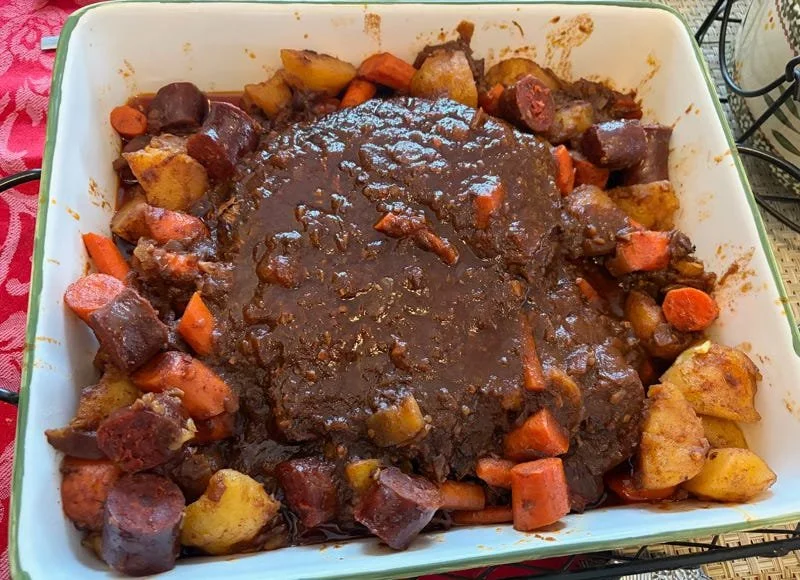
Here’s a recipe for carne assada em vinha d’alhos adapted from Portuguese-American cookbook author, David Leite. The recipe was passed down from Leite’s Azorean mother. It’s beef cooked in wine and garlic with Portuguese sausage, chouriço. It’s a one-pot meal that complements the meats with potatoes, carrots, and onions. You can also substitute linguica or more easily found dry cured Spanish chorizo.
If you make it and think this resembles American pot roast, you are not alone. Consider it a Portuguese pot roast that over time may have led to a tremendously popular Goan dish thousands of miles away. For a Madeiran version that uses porkinstead of beef, check this recipe out.