
Not Free-Range — Tree-Range
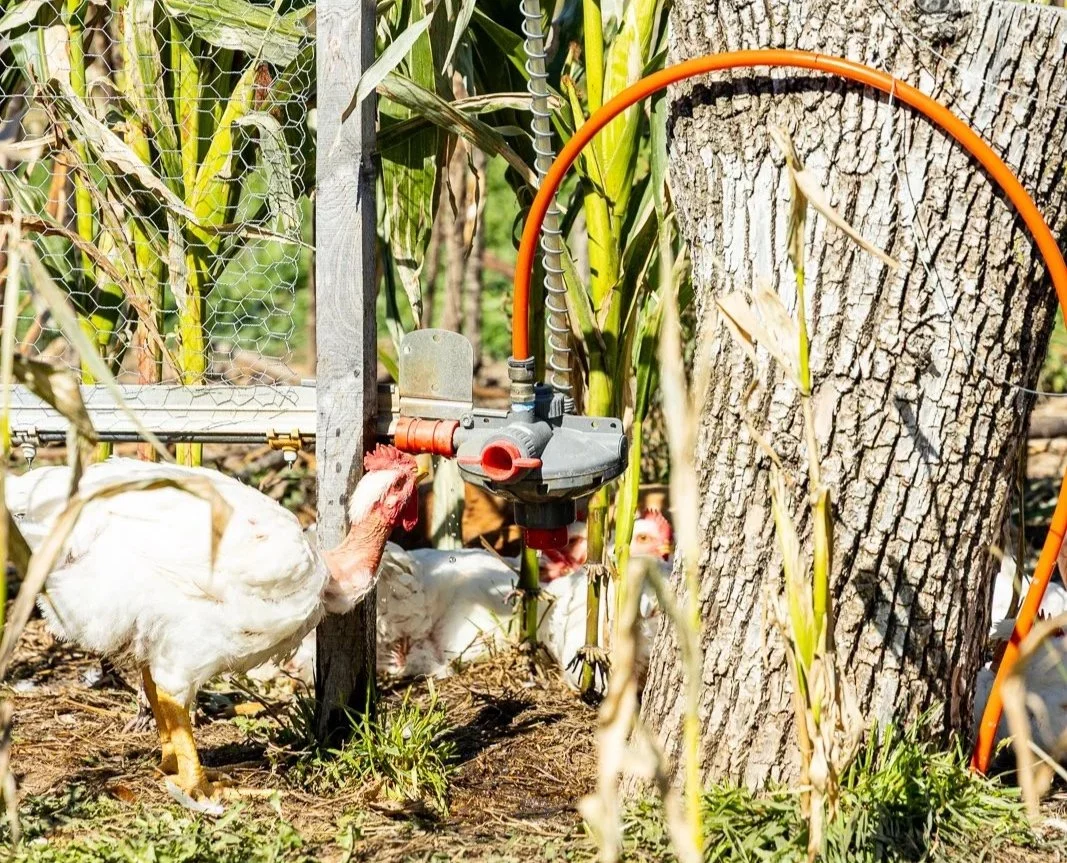
On a farm just west of Northfield, Minn., flocks of white, tawny, and speckled chickens spend their days roaming through rows of hazelnut and elderberry trees. They peck away as they please, foraging insects, native plants, sprouted grain, and any fruit that has dropped from the branches overhead. Their water sources are scattered throughout the groves — and while they could go into the barn to eat, drink, and rest, they usually don’t. Everything they could possibly need is outside. Just how they like it.
Now here’s where it gets interesting: The chickens’ manure fertilizes the soil, which nurtures the young trees — which in turn provide the flock with more food, more shade, and more protection from aerial predators like hawks and owls. It’s environmental symbiosis at its best. A full-circle system where nature works exactly as intended.
It’s also a rarity in today’s agricultural industry.
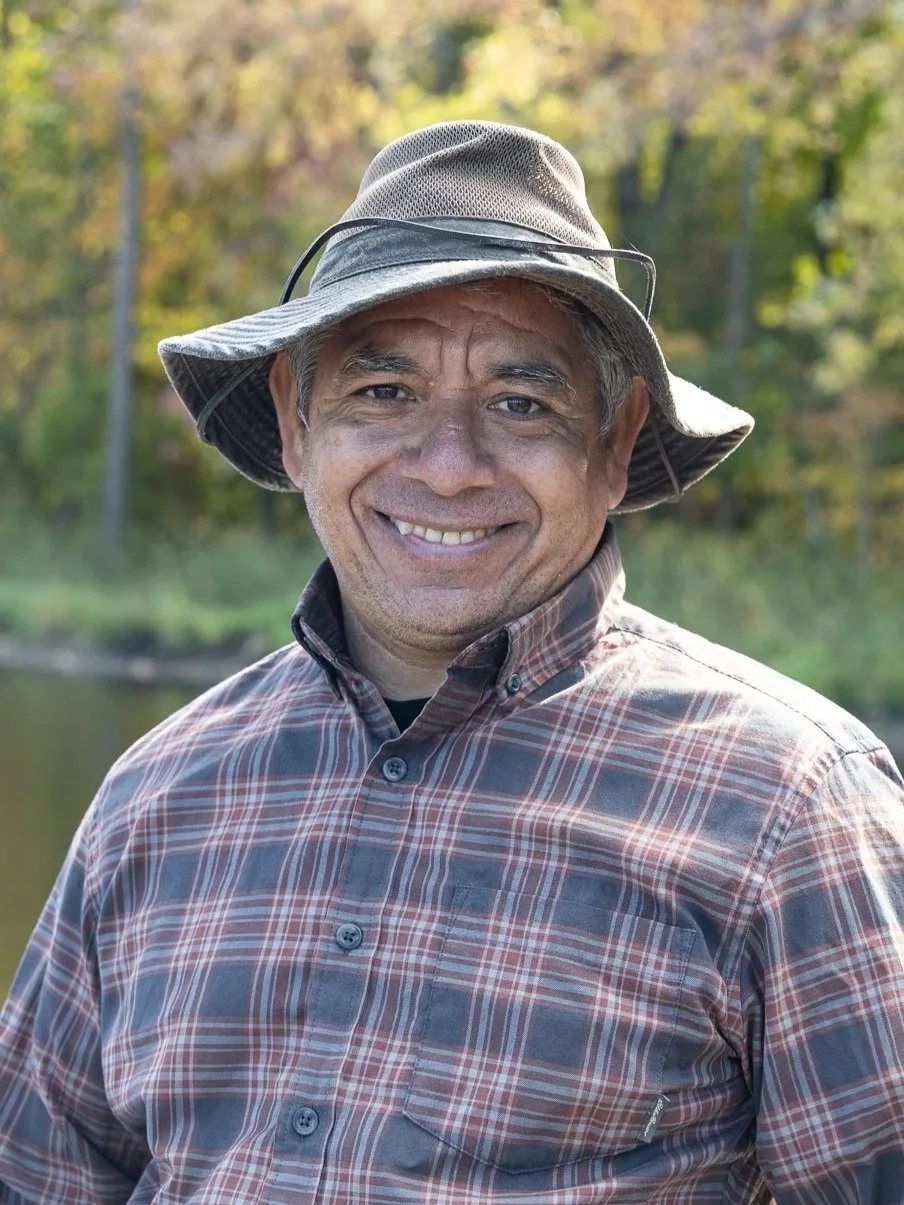
This swath of land is the headquarters for Tree-Range® Farms — a slow-growth, hormone- and antibiotic-free poultry brand built by Regenerative Agriculture Alliance founder Reginaldo Haslett-Marroquin, his wife Amy, and their three children.
Reginaldo, or Regi, grew up in northern Guatemala, the son of a farmer with a vision of building a forest-based agricultural model that would produce anything the land would grow. It took many years, but eventually his family found themselves selling everything from yams and coffee to tangerines and beans at local markets — and furnishing their own table with the food they grew.
By seventh grade, Regi knew he wanted to study agriculture. Not to learn how to grow — he had real-life education on that front, after all — but to understand why his father’s agroforestry system worked as well as it did. During his time studying at the Escuela Nacional Central de Agricultura and the Universidad de San Carlos de Guatemala in the late ‘80s and early ‘90s, he developed a passion not just for growing crops and raising livestock in their ancestral environments, but also for regenerative and Indigenous farming practices.
Flash forward to 2020 when Regi and his family purchased the Northfield farm: The soil was fallow from decades of corn and soybean planting, but 29 of the 75 acres were wooded with 60-year-old trees. This inspired him to plant an additional 8,200 hazelnut trees with the goal of reforesting the land, healing the soil, and raising chickens under tree canopies — an environment closest to their ancestral habitat. Why hazelnuts? The woody perennials are native to Minnesota, and their low-to-the-ground canopies make it difficult for hawks and eagles to swoop underneath and snatch up chickens.
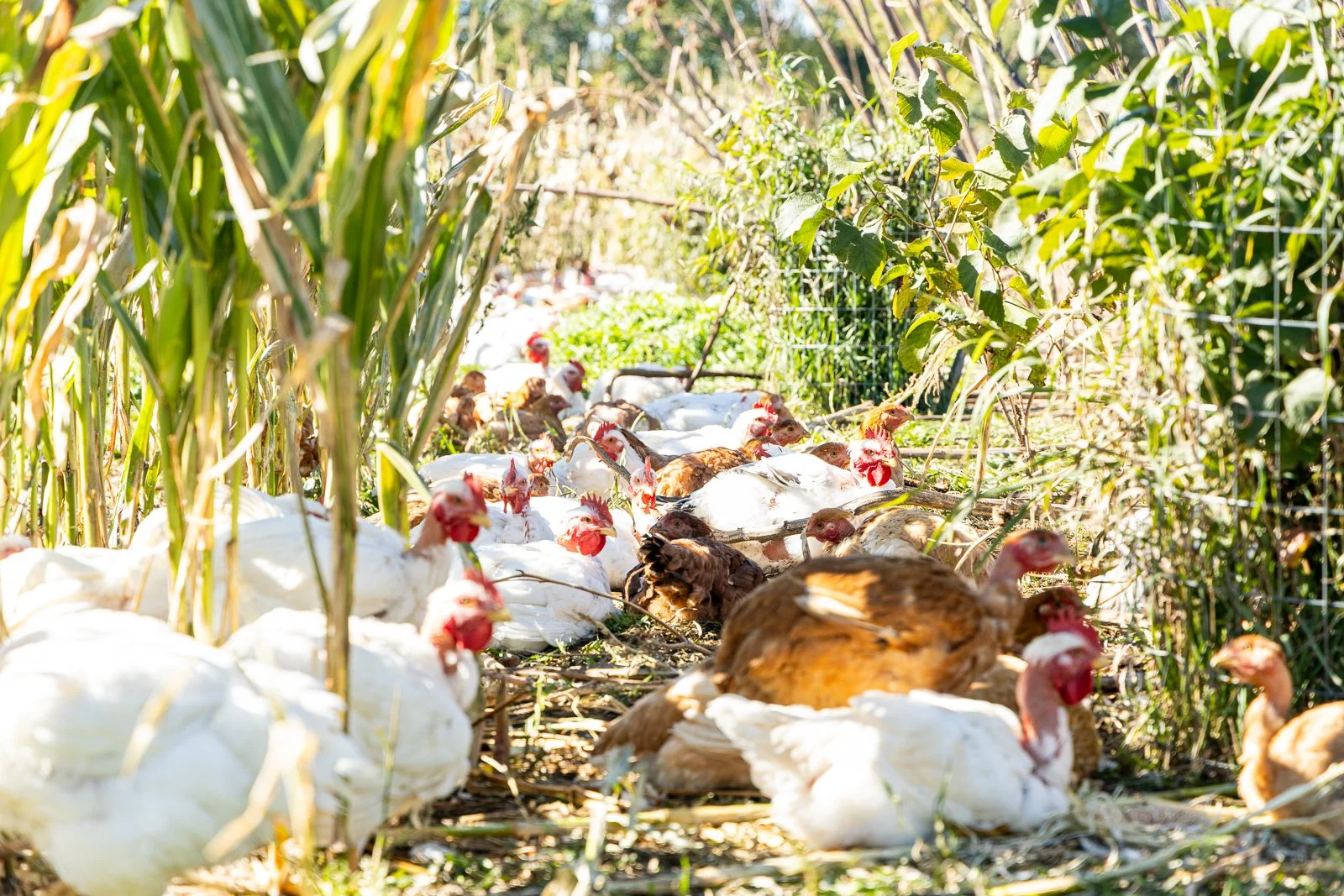
This intentional integration of trees and grazing livestock — be it cattle, goats, deer, or chickens — on the same land is also known as silvopasture farming. According to the U.S. Department of Agriculture, a silvopasture system requires intensive management but has many benefits across the entire food system.
For the environment, it helps increase wildlife diversity and improve both water and soil quality while protecting from erosion. For the animals, the trees provide protection from heat, weatherand predators, thereby improving their overall well-being. For farmers, silvopasture provides both short- and long-term income sources — the livestock income funds the tree operation until such a time as the tree crop is ready for harvesting. And for all of us at home, it provides tender, flavorful meat with higher nutrient density thanks to the animal’s low-stress lifestyle and diverse grazing diet, as well as the improved soil health.
How has this approach played out for Tree-Range Farms? Runoff testing shows Reginaldo’s land has gone from essentially a monoculture-induced ecological desert to a haven of rich soil and biodiversity, ripe with dragon flies, migratory birds, pollinators, fungi, possums — you name it. Weed pressure is down compared to five years ago, and those perennial hazelnuts are taking over the fields.
“To see ecological restoration at this level is very rewarding, to say the least,” Reginaldo wrote on one of his many LinkedIn posts for the Regenerative Agricultural Alliance.
The farm has been successful economically, too. Three-quarters of the way through this past season, the farm had already produced a total of roughly 80,750 pounds of chicken — enough to feed high-quality, protein-rich meat to around 734 people for a full year. The chicken manure also generated enough fertilizer for most of the farm, supporting over 15 fruit, nut, and vegetable crops. They expect to have elderberries ready for market by 2026, and hazelnuts by 2028. And they’re actively seeking operating partners in the Southern states to expand into year-round egg production under the same regenerative standards.
But for all the talk about chickens, Regi says it’s not really about the chickens. “It’s about restoring the dignity of the farmers and workers, the nutritional integrity of the food from the farm, and the full potential of the ecosystem.”
In fact, he has his sights set on making his Northfield headquarters the Midwest’s premier demonstration farm for the regenerative poultry system — the ultimate model for how regenerative methods can bring social, economic, and ecological healing to communities and the land in a self-sustaining way. And he currently offers a regenerative poultry training program that provides a path for farmers to join the growing network of Tree-Range® chicken producers and share in the brand’s economic success.
“By leading in this one area, we show how it is possible to scale regenerative agriculture with integrity,” he says.
Of course, all this would be moot if the chicken didn’t taste good too.
Lucky for us, Tree-Range chickens experience little stress in their protected forest environments, so their meat is high-quality and tender (especially compared to chickens that release high levels of cortisol under stressful living conditions). And their diverse diet creates a more nuanced flavor — rich, earthy, and reminiscent of all that good stuff on Reginaldo’s land. Pick some up in Eastside’s meat & seafood department, and tell us what you can taste!