
Inside “Rooted”
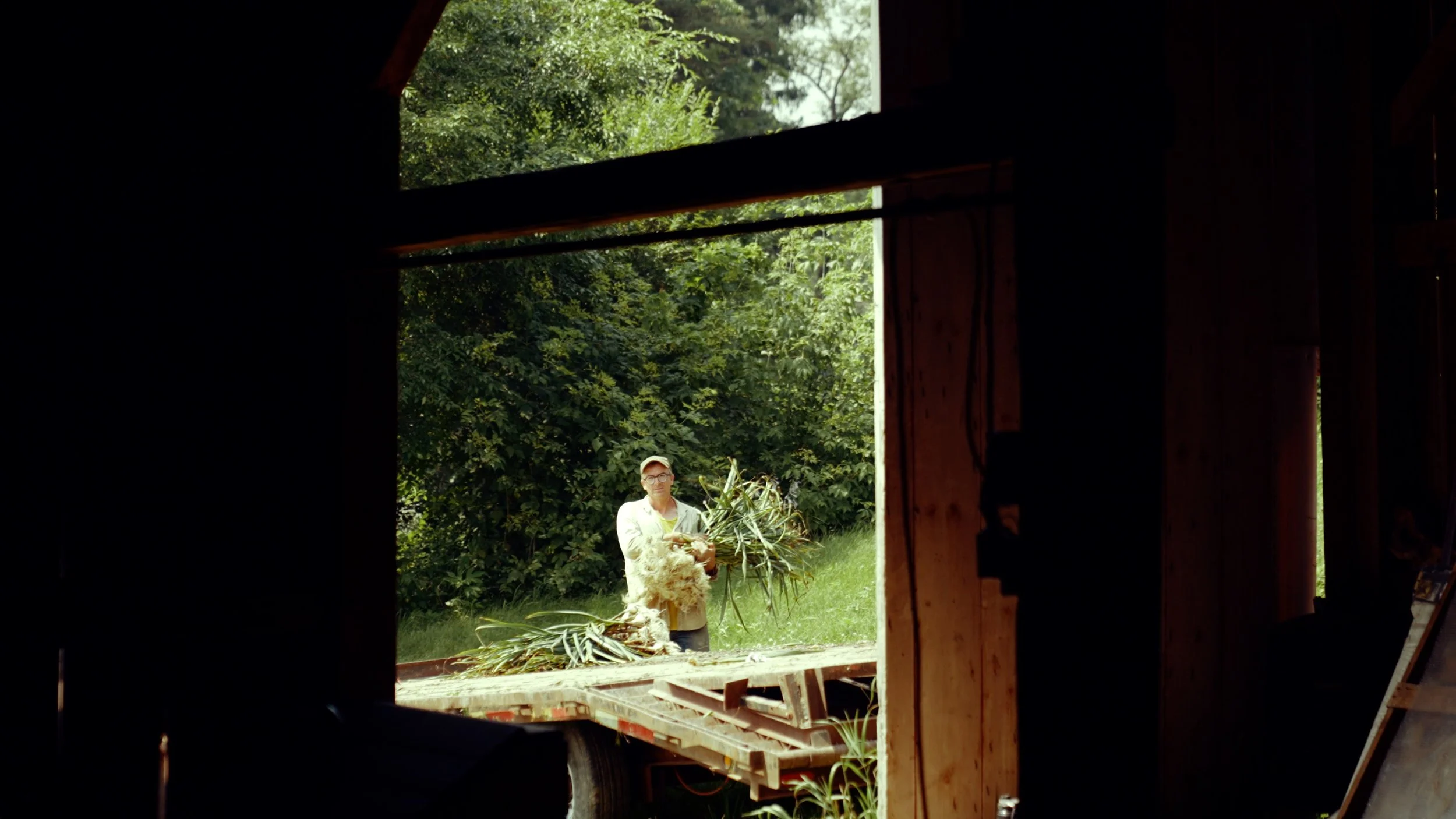
On a cool morning in Cannon Falls, Minnesota, the sun is slow to arrive. A thin layer of fog, the kind that collects in bowls of farmland before lifting like a curtain, hangs above the herb rows at Tuo Vang’s Farm. Liz Tracy, bundled lightly against the kind of early-season chill that comes with the threat of frost, stands at the edge of the field holding stillness the way other directors might hold a camera.
Vang trails his fingers along a narrow row of vegetation. Tracy’s crew is still unloading equipment, discussing lenses, and debating where to place the first frame. But Tracy doesn’t move. She watches the farmer’s hand, the slight hesitation, the way it hovers just long enough to register the stakes: a frost at the wrong moment can undo months of work.
Later, she tells me this is why she makes documentaries. “The best scenes happen before you’ve ‘started filming,’” she says “Documentary is about noticing the thing nobody else is looking at.”She says it quietly, a truth she’s learned across a career built not on spectacle but observation. As a 21 year old intern with National Geographic Television, she had the same instinct: to wait, to listen, to watch people being themselves. It’s the instinct that’s guided her ever since.
Her latest project, Rooted, a documentary by The Great Northern in collaboration The Good Acre, takes her into the lives of farmers across Minnesota. Many of them immigrants, many of them farmers of color, many of them reinventing agricultural practices to keep pace with a changing climate. For Tracy, Rooted is a meditation on the act of seeing: what it requires, what it reveals, and how that act itself has transformed in an era where everyone already knows how they look on camera.
The People Who Know They’re Being Watched
A decade ago, Tracy says, walking into someone’s home or worksite with a camera created a kind of gentle disorientation. Most people didn’t know how they appeared, literally or symbolically, through a lens. Their first instinct was to simply keep doing what they were doing. Not anymore. “People aren’t observed in the same way now,” Tracy says. “It used to be mysterious when a film crew showed up. Now everyone is so aware, so practiced.” She says this with a mix of fascination and loss. Not exactly nostalgia, but a kind of wistfulness for the early verité energy that came from filming people before they could anticipate their own performance.
But she’s not alarmed by the shift. If anything, she sees it as a new terrain to explore.“Storytelling is much more collaborative now,” she explains. “People understand framing, pacing, tone. They are aware of their image and want to shape how they appear to others. They know how their image travels and translates.” She pauses, then adds: “But I miss the slowness. The rhythm of old documentaries - the patience of them.”
In graduate school at The New School, she spent hours watching long, unhurried films by Frederick Wiseman, the Maisel brothers, and D.A. Pennebaker. She’s still moved by their quiet persistence - the way a camera could settle, almost meditatively, into the backdrop of someone’s life. “There’s a profound zone you enter when you watch something slow,” she says. “A deeper kind of seeing.”
Rooted is, in many ways, her attempt to reclaim that space - to offer audiences the chance to sit inside moments long enough for their meaning to surface.
The Farmers Who Carry Knowledge Across Borders
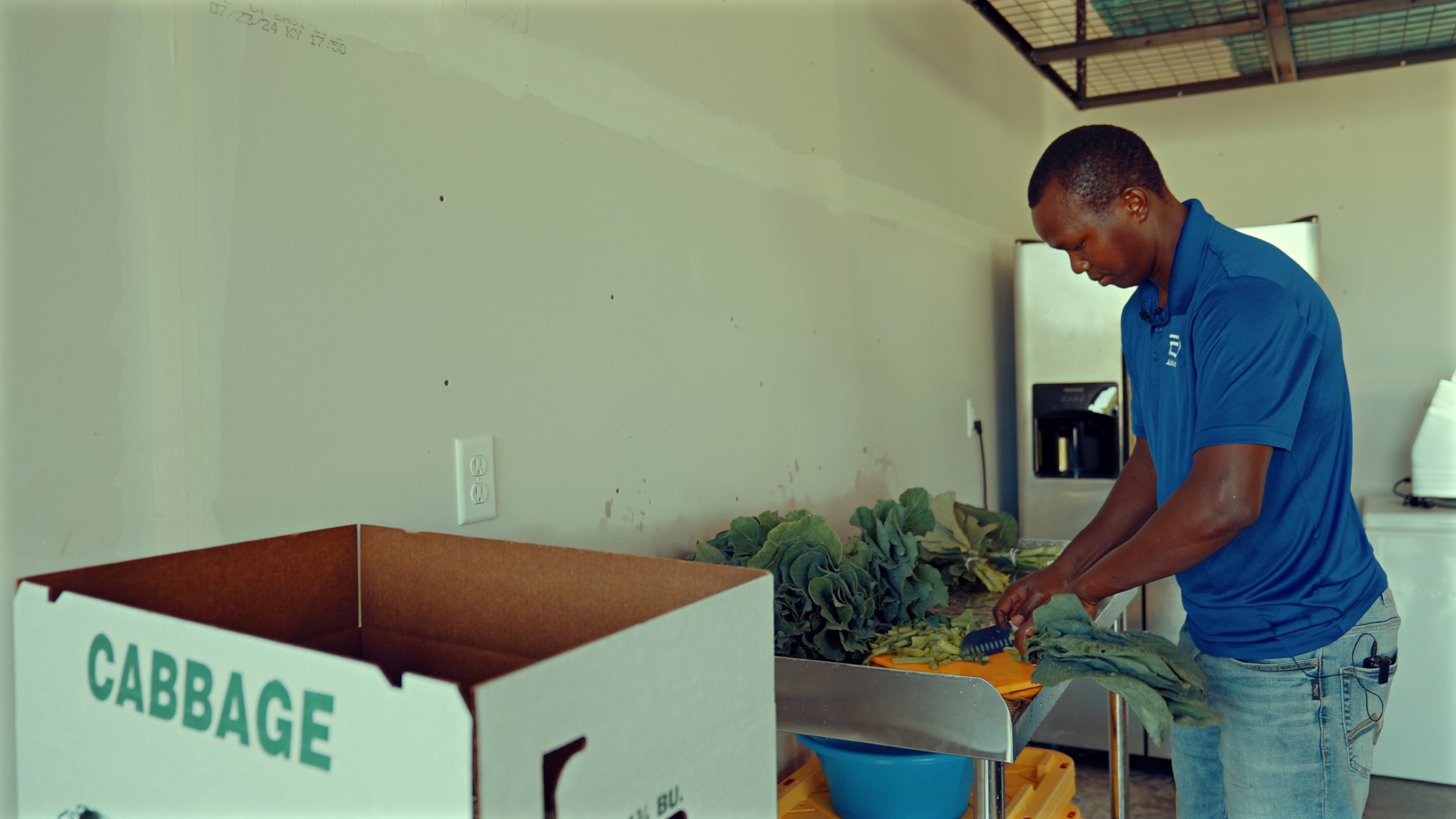
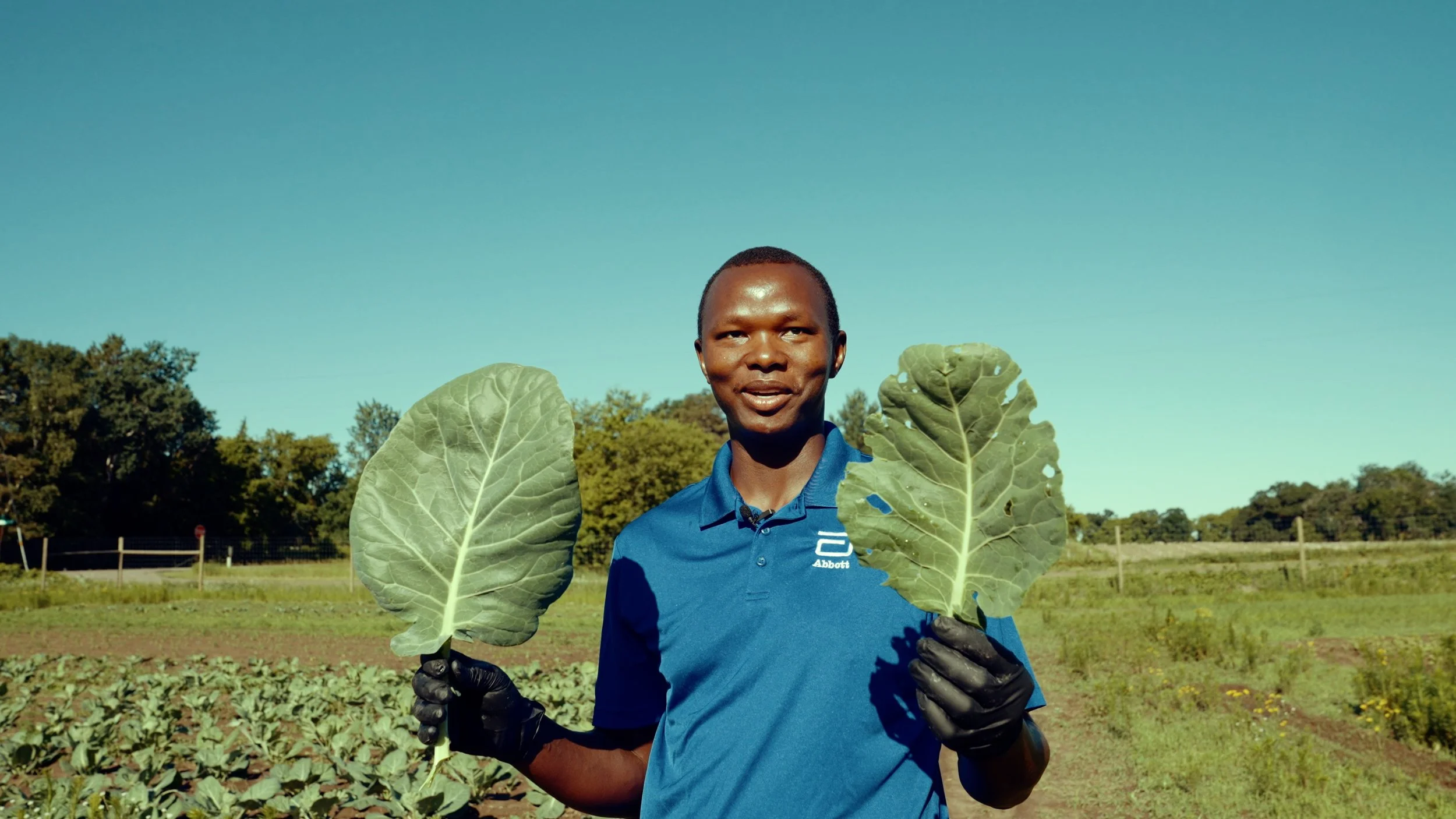
The Good Acre, the Twin Cities-based food hub where she volunteers, introduced Tracy to the farmers whose stories now anchor the film. Many arrived in Minnesota carrying agricultural knowledge from Laos, Kenya, Thailand, Central America, and East Africa. Others are third-generation Midwesterners reshaping their family land in response to climate change.
“Minnesota farmers are incredibly diverse,” Tracy says. “They’re bringing knowledge and practices shaped by their cultural heritage over generations.”
She describes Hmong farmers who grow medicinal herbs not found in grocery stores, and Kenyan farmers adapting indigenous practices to shorter, colder seasons. She talks about small-scale farmers navigating unpredictable frost lines, surviving on thin margins, and discovering new techniques as weather patterns shift under their feet.
“They’re not just growing food,” she says. “They’re inventing ways to sure climate volatility in real time, every season.
Her admiration is not superficial. It borders on reverence. “Farmers are artists,” she says. “Each farm is an expression. Each one is a vision.”
“Minnesota Could Feed Minnesota”
At one point, I mentioned a phrase I’d heard: Minnesota could feed Minnesota. She stops - a stillness that feels deliberate, like she’s letting the truth land. “I love that,” she says. “Minnesota doesn’t brag about itself. But it’s true - the state could be self-sustaining and there's already movement in this direction. There's great potential for ourcommunity to benefit culturally and economically by continuing to support local growers and food businesses.”
It’s the kind of line that changes the way you look at the landscape - the fields, the distribution networks, the quiet competence of people growing food in a state many imagine as frozen half the year. Tracy sees the potential everywhere.“When you meet these farmers,” she says, “when you see what they’re doing with so fewresources - it shifts something in you.”
You understand food differently.
You understand the land differently.
You understand Minnesota differently.
To meet the farmers at the heart of Rooted, and experience Tracy’s full vision, join us at The Great Northern Festival for the film’s premiere on March 26th at 7:00pm at The Main Cinema.
We are deeply grateful to Eastside Food Co-op for supporting this film. Their commitment to local producers,
healthy food access, and community care is woven directly into the heart of Rooted.