
PIG MEETS COW
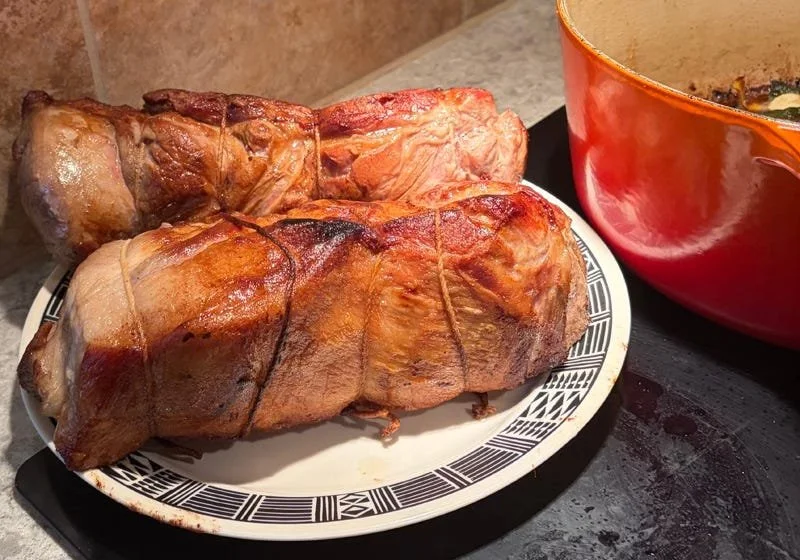
Italian-style milk-braised pork sounds odd, looks weird, and tastes divine.
By Roseanne Pereira
This story was created by our partners at the Heavy Table, a weekly culinary newsletter dedicated to covering the best food and drink of the Upper Midwest. Back them on Patreon to receive four distinct email newsletters focused on dining, the restaurant business, spirits, and home cooking: http://www.patreon.com/heavytable
Roseanne Pereira / Heavy Table
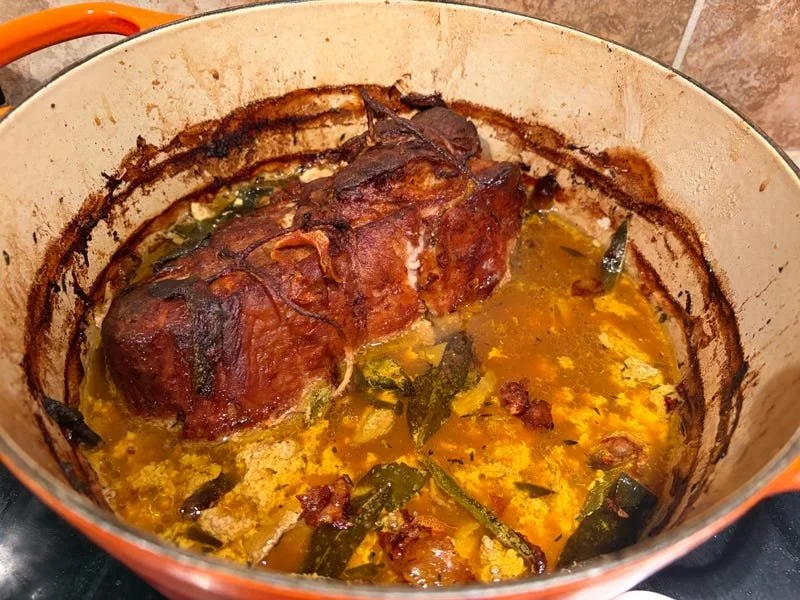
I first came across this rustic Italian dish known as maiale al latte, while reading Tamar Adler’s An Everlasting Meal: Cooking with Economy and Grace. It also appears in Marcella Hazan’s The Classic Italian Cookbook. Alder writes, “This slow-cooked meat dish must be one of the most delicious things ever made from any of the ingredients in it. The cooked milk separates into golden curds, which look strange and taste divine.”
Roseanne Pereira / Heavy Table
I concur. Salting sufficiently is crucial as are the curds, which though not photogenic, are nut-brown flavor clusters. As Hazan puts it, “Whenever I teach this dish I am greeted by more or less polite skepticism, which usually turns to enthusiasm at the first taste.” Like many braised dishes, this one is simple and forgiving in its preparation. There are also similar milk-braised versions of chicken or lamb if pork is not your preference.

Roseanne Pereira / Heavy Table
MAIALE AL LATTE (MILK-BRAISED PORK)
4-5 lbs, boneless pork shoulder (also called “butt” of “Boston butt”), cut into two pieces
Tons of salt
2 tablespoons extra virgin olive oil
3 tablespoons butter
6 garlic cloves, peeled
30 sage leaves
Strips of lemon peel from 4 lemons
4 cups of milk
Truss each of the two pieces of pork shoulder with butcher’s twine to help the meat hold together during cooking. Season the pork very generously with salt all over. You can do this the day before serving by refrigerating the salted pork overnight, then letting it sit at room temperature for one hour before cooking. If you salt the day of cooking, still make sure to let the pork sit at room temperature after salting for at least an hour before cooking.
Preheat oven to 300 degrees. Heat a large Dutch oven or heavy and deep saucepan over medium-high, then add olive oil and half of butter. When the butter stops foaming, add the pork and brown on all sides. I set a timer for five minutes per large side to ensure the meat browns undisturbed. Remove pork from pot. Warm garlic, sage, bay leaf, and lemon peel with the rest of the butter in the same pot for a few minutes.
Return pork to pot adding 2 cups milk and bring to boil. Reduce to simmer and put pot into heated oven, partially covered. Check pork every half hour, turning the pork so it cooks evenly. The milk will start to caramelize into golden curds. Add the rest of the milk a cup at a time as the liquid reduces.
Cook until meat is very tender and can be easily pierced with a knife, at least 3.5 hours. Make sure the internal temperature is at least 145 degrees. Transfer meat to a cutting board and let rest for 15 minutes.
To serve, cut the trussing strings off the pork and slice against the grain into thick pieces. Skim fat from pot if eating immediately. If you make this ahead of time, it’s even easier to skim the fat since the layer of fat will solidify in the fridge overnight and can be removed in pieces the next day. To reheat, place pork in a 300-degree oven until warm.
Serve meat in the reduced golden tan liquid with the curds. Serve over smashed or puréed vegetables, polenta, noodles, or your own side dish of choice. (Hazan suggests fried artichoke wedges.) Buon appetito!